Exploring Virtual Reality

Pankaj Singh
| 24-12-2025
 · Science Team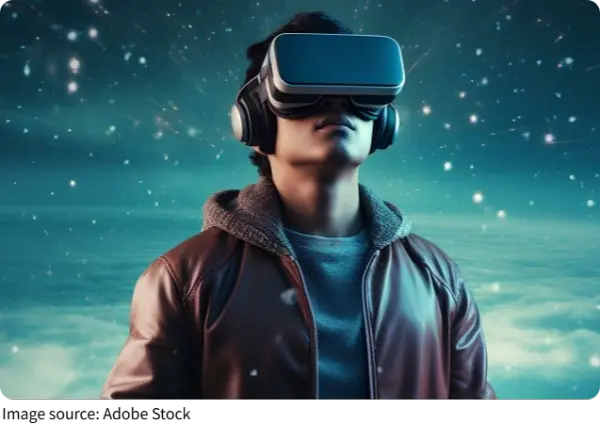
Imagine stepping into a world where everything around you feels completely real, even though you're standing in your living room. Sounds like science fiction, right?
Well, virtual reality (VR) is making that possible today. Whether it's playing games, attending virtual meetings, or even traveling to distant places, VR is changing how we experience the world.
Let's take a look at how this technology works and why it's becoming a part of our everyday lives.
What Is Virtual Reality?
At its core, virtual reality is a technology that creates a simulated environment, allowing users to interact with a 3D world as though it were real. With the help of a VR headset and sometimes special gloves or controllers, users can experience sights, sounds, and sometimes even touch sensations in a completely immersive way.
The Headset: The most essential part of the VR experience is the headset. Devices like the Oculus Quest, PlayStation VR, and HTC Vive provide a screen close to your eyes and use sensors to track your head movements, allowing you to look around in a virtual environment.
Controllers: These handheld devices allow you to interact with the VR world, whether it's picking up objects or controlling movement. The controllers are designed to track your hand and arm movements, giving you an almost lifelike sense of interaction.
Software: The experience wouldn't be complete without VR software. Games, educational programs, and even VR tours rely on special software that's designed to create interactive, dynamic 3D worlds.
Virtual Reality in Entertainment
One of the most well-known applications of VR is in the entertainment industry, particularly in gaming and movies. But its potential goes far beyond just immersive video games.
VR Gaming: Video games in VR allow players to experience action firsthand, not just through a screen. For example, in games like “Beat Saber” or “Half-Life: Alyx,” players are fully immersed in a virtual world where they can physically interact with the game, whether it's swinging a bat or solving puzzles.
Virtual Cinemas: Imagine watching your favorite movie, not on a flat screen, but in a virtual theater where you can look around and even “sit” in different seats. VR cinema experiences are becoming more popular, offering a completely new way to experience films.
Social VR: Platforms like VRChat allow people to interact with others in virtual spaces, attending virtual concerts or parties, or just chatting with friends across the world as avatars in a 3D environment.
Virtual Reality in Education and Training
Beyond fun and games, VR is proving to be a powerful tool in education and training. By creating simulated environments, VR helps learners experience situations that are difficult or impossible to recreate in the real world.
Medical Training: Medical students are now using VR simulations to practice surgeries and medical procedures. This allows them to make mistakes and learn in a risk-free, controlled environment. For instance, a virtual heart surgery program lets students practice before performing real operations on patients.
Flight Simulators: Pilots have been using VR simulators for decades, allowing them to train in various scenarios without the need for an actual airplane. These simulators can replicate weather conditions, equipment failures, and even emergencies to prepare pilots for the unexpected.
History and Exploration: Students can explore ancient civilizations, travel to outer space, or visit the Great Wall of China—all from the comfort of their classrooms. VR brings history and science to life in ways that traditional textbooks can't.
Virtual Reality in Healthcare
VR is not just a tool for training or entertainment; it's also making waves in healthcare. From treatment of mental health issues to pain management, VR is helping doctors improve patient care in innovative ways.
Pain Management: Studies have shown that VR can help reduce pain in patients undergoing procedures or recovering from surgery. Immersing patients in relaxing or engaging virtual worlds can distract them from pain and speed up recovery.
Therapy and PTSD Treatment: Virtual reality is being used in exposure therapy for individuals suffering from PTSD. By simulating triggering environments in a safe and controlled space, therapists can help patients confront and process their trauma.
Rehabilitation: VR is also being used in physical rehabilitation. For example, patients recovering from strokes or injuries can use VR to perform exercises that help them regain movement and strength in a way that's both engaging and effective.
The Future of Virtual Reality
As technology continues to evolve, VR is expected to become an even bigger part of our lives. What does the future hold for this immersive experience?
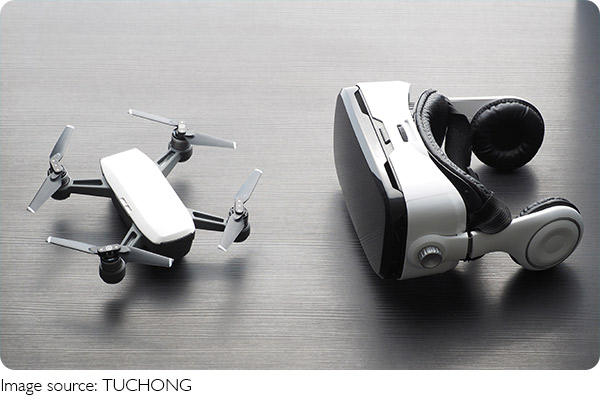
Improved Hardware: Future VR headsets will likely be lighter, more comfortable, and offer higher resolutions, making the experience more lifelike. Improvements in haptic feedback (touch sensations) will allow users to feel even more immersed in virtual environments.
Full-Body Tracking: Currently, VR only tracks your head and hands, but future developments might allow for full-body tracking, meaning your entire body could be represented in a virtual world, making interactions even more realistic.
Social VR Evolution: Social VR platforms will continue to evolve, with more immersive, lifelike avatars and the ability to attend virtual events, concerts, or meetings in real-time, as though you were physically present.
Final Thoughts
Virtual reality has already made a huge impact across various industries, from gaming to healthcare, and it's only going to get more powerful. As the technology advances, VR will provide new ways for people to learn, interact, and experience the world. While VR may still feel like a novelty to some, it's rapidly becoming an integral part of our digital lives, changing the way we work, play, and communicate. The next time you slip on a VR headset, remember—you're stepping into a new reality!